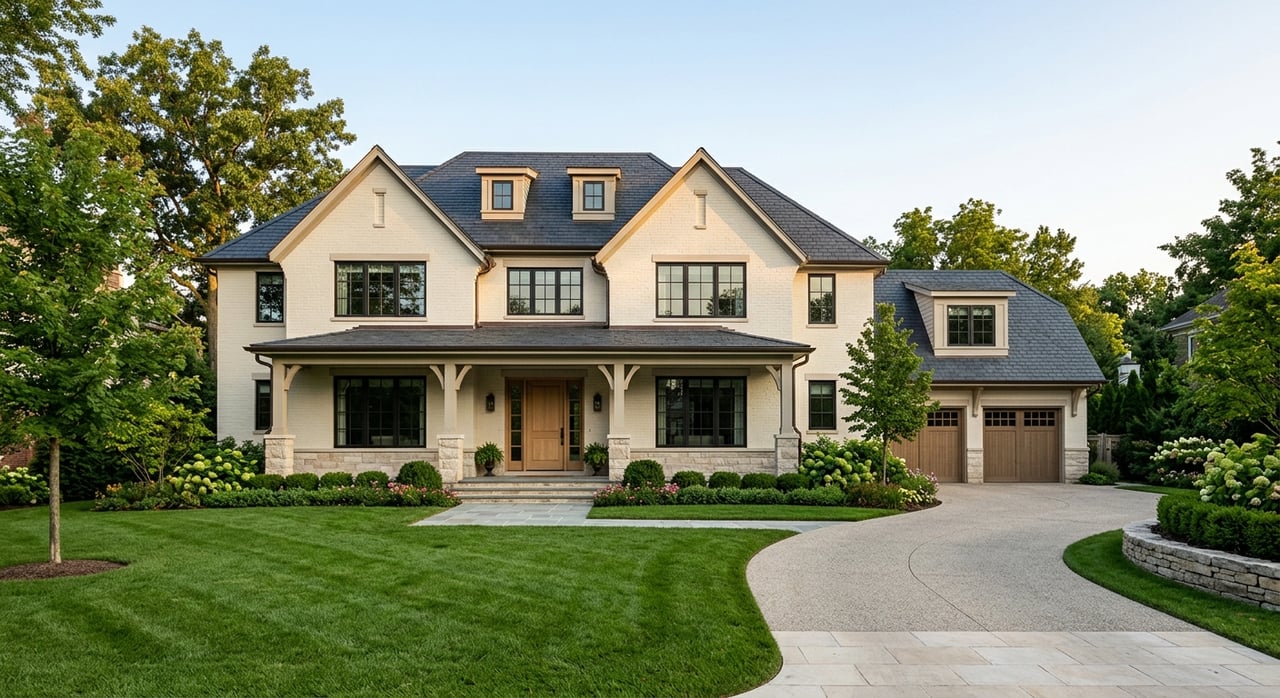
Cherry Hills Village Real Estate Market Trends for 2026
May 21, 2026
May 21, 2026
If you look at Cherry Hills Village the same way you look at the broader Denver market, you can miss what really drives value. This is a small, high-equity luxury market where lot size, privacy, setting, and pricing discipline can matter just as much as square footage or finishes. If you are buying or selling here, understanding those signals can help you make better decisions with more confidence. Let’s dive in.
Cherry Hills Village is not a typical suburban market. It is a predominantly residential city in Arapahoe County with about 6.5 square miles and a population a little over 6,300, according to recent Census estimates and city information.
It is also an unusually high-equity market. Census data shows a 97.0% owner-occupied rate, median household income above $250,000, and a median value of owner-occupied homes above $2,000,000. That combination points to a market where owners often have staying power, and where forced selling pressure is generally lower than in more conventional markets.
The city’s land-use framework helps explain why inventory can feel especially tight. Cherry Hills Village is planned around low-density, estate-style residential living, with rural-density parcels at 2.5 acres or more, low-density parcels at one acre or more, and medium-density parcels at 16,000 square feet or more. In practical terms, that means parcel characteristics are a major part of value.
For you as a buyer or seller, this matters because two homes with similar interiors can perform very differently if their lots, orientation, privacy, or setting differ. In Cherry Hills Village, the land is often part of the luxury proposition.
Recent public data points all tell a similar story, even if the numbers do not match exactly. Zillow reported a typical home value of $3,245,374 as of April 30, 2026, up 6.5% year over year, along with 35 homes for sale and a median list price of $3,613,833.
Realtor.com’s March 2026 snapshot showed a median listing price of $4,222,500, 50 homes for sale, and a median 41 days on market. It also labeled Cherry Hills Village a seller’s market, while showing homes selling for 5.6% below asking on average and a 94% sale-to-list ratio.
Redfin’s March 2026 data came in higher on closed sales, with a median sale price of $4,999,000, 12 homes sold, 56 median days on market, and a 97.9% sale-to-list ratio. Redfin also described the market as somewhat competitive, noting that some homes receive multiple offers and that hot homes can go pending in about 13 days.
The key takeaway is not to treat any one dashboard as perfect. Zillow tracks estimated values, Realtor.com focuses on active listings, and Redfin centers on closed sales. In a small luxury market like this, the safest read is directional: prices are high, inventory is thin, and precision matters.
In Cherry Hills Village, price per square foot can be more useful than headline sale price, but only when you apply it carefully. Realtor.com put the market at $580 per square foot, while Redfin reported $582 per square foot.
That is a helpful baseline, not a shortcut. In a market with estate lots, custom construction, and wide variation in site quality, price per square foot should be paired with a close look at acreage, layout, updates, and overall appeal. A larger home on a less compelling parcel is not always worth more than a smaller, better-positioned property.
One of the easiest mistakes in this market is assuming Cherry Hills Village behaves as one uniform area. It does not. The city spans three ZIP codes, 80113, 80111, and 80121, and public inventory data shows very uneven listing activity from one pocket to the next.
In March 2026, Realtor.com showed Old Cherry Hills with 5 active listings. Cherry Hills Farm, Cherry Hills North, Chaumont in Cherry Hills, Cherry Hills Park, and Cherryridge each had 3 to 4 listings, while several other neighborhoods had only 2, 1, or even no active listings at all.
That unevenness matters. When inventory is this limited, one or two notable listings or sales can shift averages quickly. If you are buying, you need to compare a home against its closest true substitutes, not a broad citywide average. If you are selling, your pricing strategy should reflect your specific pocket and property profile.
The broader Denver metro market moved into its normal spring rhythm in April 2026. REcolorado reported that closed listings were flat year over year at 4,018 homes, median prices held at $600,000, and median days in MLS rose slightly to 15. New listings rose month over month, while days in MLS fell by three days.
Cherry Hills Village appears to follow that same seasonal pattern, but with much thinner inventory. Public dashboards placed active inventory in roughly a 35-to-50-home range in March and late April 2026, with median list prices between about $3.6 million and $4.2 million, depending on the source.
Realtor.com also showed the March median listing price up 8.48% month over month and active listings up 18.42% month over month. That suggests more spring inventory was coming online, even though the total number of available homes remained very small.
For sellers, spring can still be an important window because more buyers are active. But in Cherry Hills Village, timing alone does not carry a listing. Presentation, preparation, and realistic pricing usually matter more than trying to catch the perfect week.
The homes that move quickly here usually check several boxes at once. They tend to offer strong lot quality, broad buyer appeal, polished presentation, and pricing that feels grounded in the current market rather than anchored to an aspirational number.
Redfin’s March 2026 data supports that pattern. Some homes received multiple offers, 8.3% of sales closed above list price, and hot homes could go pending in around 13 days.
That does not mean every luxury listing will move fast. It means buyers are responsive when a home feels well-positioned for the market. Turnkey condition, a desirable parcel, and a price that respects current comps can create momentum, even in a selective market.
Luxury pricing mistakes can be costly in a market this thin. Redfin’s city page highlighted one example, 4500 S Dasa Dr, which sold after 320 days and 17% under list price.
That kind of result is a reminder that high price points do not insulate a home from market feedback. In Cherry Hills Village, overpricing can stretch out days on market and increase the gap between list price and final sale price.
Homes with unusual layouts, deferred maintenance, or highly specific buyer appeal may also take longer to sell. When the buyer pool is smaller, it becomes even more important to launch with a strategy that matches the property’s strengths and limitations.
If you are buying in Cherry Hills Village, broad market headlines only get you so far. You will want to focus on the details that shape long-term value and near-term competition.
Pay close attention to:
Because inventory is limited, the right home may attract quick action. At the same time, the public data shows that this is still a negotiable market overall, with sale-to-list ratios below 100% on the major dashboards. That means urgency and discipline both matter.
If you are preparing to sell, the market is giving a fairly clear message. Well-positioned homes can move quickly, but buyers are still price aware and selective.
That makes accurate pricing especially important. In a small city with inconsistent inventory and wide variation in lot and home characteristics, the most optimistic comp is not always the most useful one.
A strong listing plan should account for:
For high-value properties, this is where hands-on guidance can make a real difference. A tailored strategy, thoughtful preparation, and curated exposure are often more effective than simply testing the market at an ambitious number.
So, is Cherry Hills Village a seller’s market or a buyer’s market? The fairest answer is that it leans seller-favored, but it behaves more like a selective luxury market than an overheated one.
Inventory remains limited, some homes attract fast interest, and values remain high. At the same time, average sale-to-list ratios below 100% show that buyers are not chasing every listing at any price.
That is why market reading here requires nuance. You are not just asking whether prices are up or inventory is down. You are asking which homes are being rewarded, which ones are being discounted, and why.
If you are planning a move in Cherry Hills Village, that kind of local, property-specific interpretation matters more than a single headline stat. For tailored guidance on buying, selling, or evaluating your next step in this market, connect with Kelly Mauro.
Stay up to date on the latest real estate trends.

Kelly Mauro is dedicated to helping you find your dream home and assisting with any selling needs. Contact me today to start your home-searching journey!