A Guide to Cherry Hills Village Architecture Styles
June 11, 2026
June 11, 2026
If you’re drawn to Cherry Hills Village, you’re probably not looking for just one architectural style. You’re looking for a setting, a sense of privacy, and a home that fits the way you want to live. In this market, the architecture is shaped as much by lot size, mature trees, and estate planning as it is by brick, stone, or rooflines. This guide will help you understand the main estate styles in Cherry Hills Village and what they can mean for your home search or sale. Let’s dive in.
Cherry Hills Village is best understood as an estate community with several architectural layers, rather than a neighborhood defined by one signature house type. Official planning documents describe the city as a low-density, single-family residential community that aims to preserve its semi-rural, pastoral, and open character. That context matters because it helps explain why homes here often feel set apart from one another, with generous land, long drives, and a strong sense of privacy.
The city’s planning framework also points to larger parcel patterns. Earlier master plan language describes rural-density residential land as single-family parcels of 2.5 acres or larger and low-density residential land as parcels of 1 acre or larger. Streetscapes are also intended to accommodate equestrians, pedestrians, and bicyclists, which reflects the area’s long-standing rural influence.
That history still shows up today. The city notes that the area once had wide open fields, scattered homes, and residents who kept horses, and it continues to protect places such as Quincy Farm, a 17.5-acre National Register property along the High Line Canal. When you tour homes here, that backdrop helps explain why site planning and land often carry as much weight as the architecture itself.
Some of Cherry Hills Village’s most notable homes come from the early 20th century and reflect a mix of revival-style estate architecture. Rather than one dominant look, you’ll find Georgian Revival, Colonial Revival, Classical Revival, Tudor Revival, and English manor influences. These homes helped establish the visual identity many buyers still associate with the area.
One of the clearest examples is Buell Mansion, completed in 1920 and designed by William and Arthur Fisher in Georgian Revival style. The grounds were landscaped by Saco DeBoer, and the property is now part of a 110-acre gated enclave with private roads, trails, and open space. It reflects the formal, legacy-estate tradition that remains part of Cherry Hills Village’s reputation.
The Foster-Buell Estate adds another variation to that historic layer. National Register materials identify Colonial Revival and Classical Revival influences, while historical descriptions refer to it as a modified Southern Colonial home. Its formal gardens and mountain views show how architecture and landscape design were intended to work together on estate properties here.
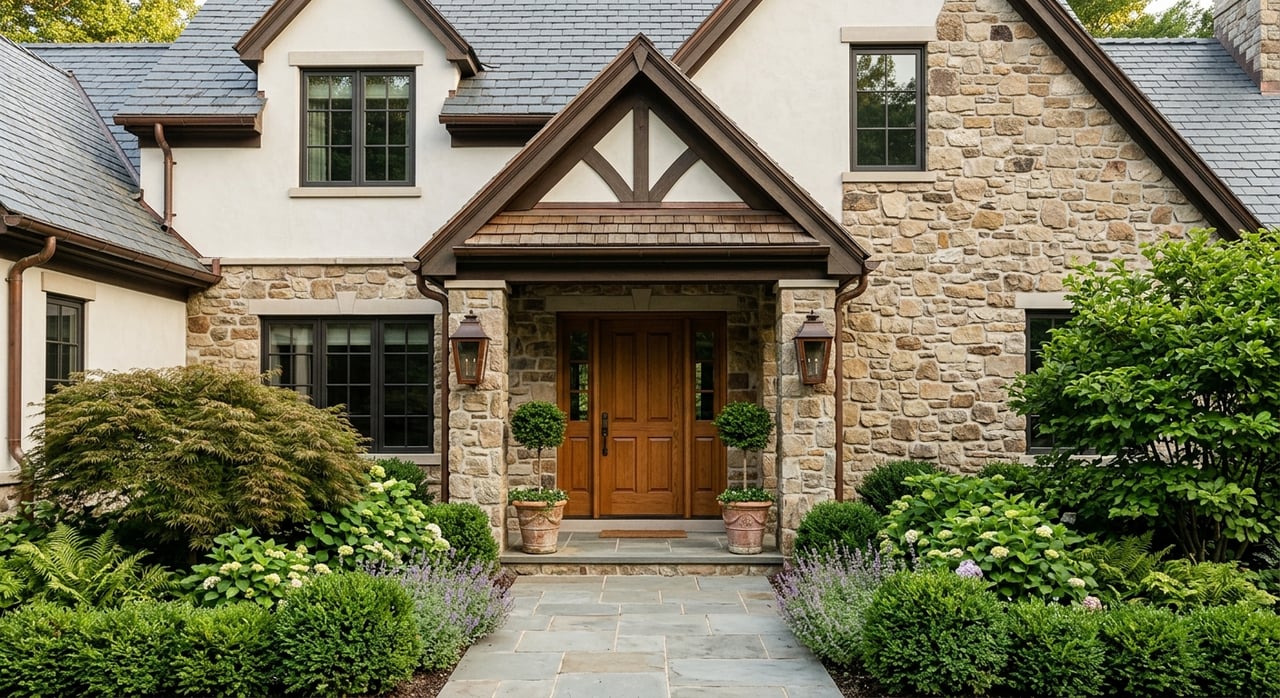
Tudor Revival is also an important part of the local architectural story. The Owen Estate, built in 1923, is described in National Register materials as an excellent example of a massive English manor house and Tudor Revival estate. Features included steep rooflines, half-timbering, a gatehouse complex, and multiple outbuildings, all set within a private landscape.
Other officially recognized examples include the Maitland Estate and the Little Estate, both Tudor Revival properties. The Little Estate sits on a 2.5-acre site with mature trees and a pool house. Hopkins Farm adds yet another dimension, with classifications that include Colonial Revival and Classic Cottage, showing that historic Cherry Hills Village architecture also includes smaller but still high-style residential forms.
Across these legacy homes, a few visual themes come up again and again:
What you generally do not see is a repetitive tract-home pattern or tight front-yard setbacks. These homes were designed to sit within the land, not just on it.
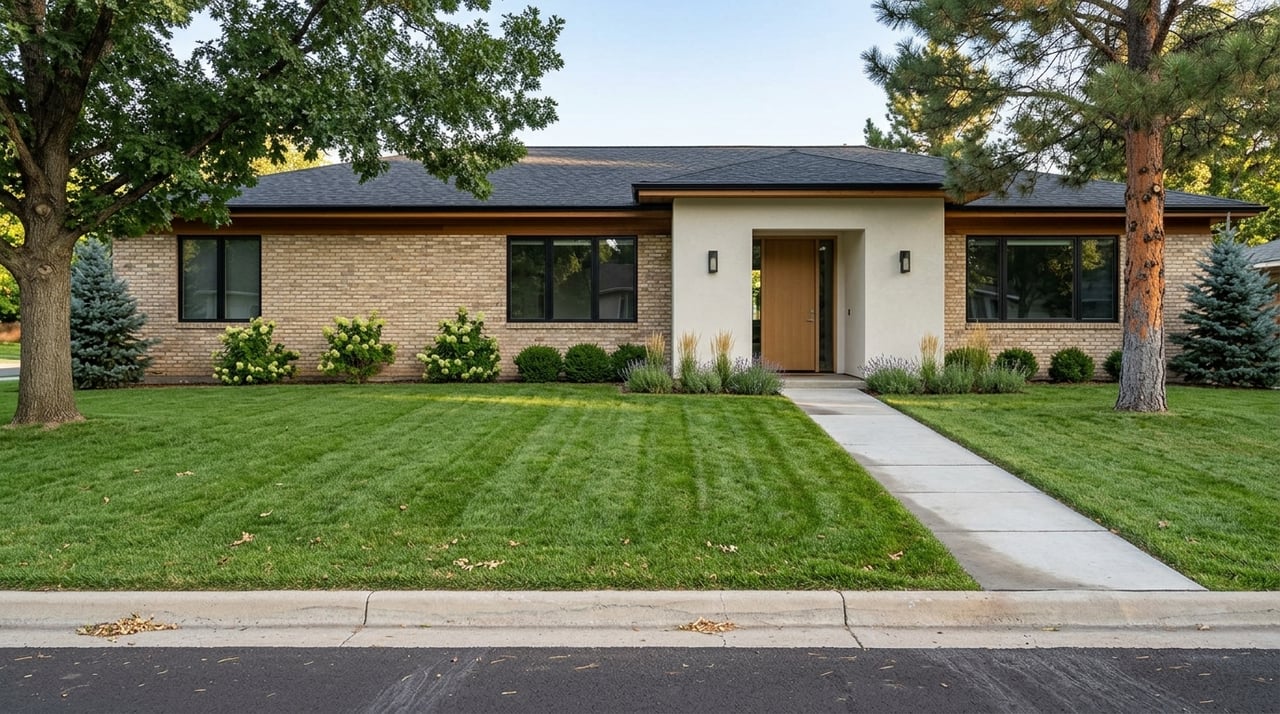
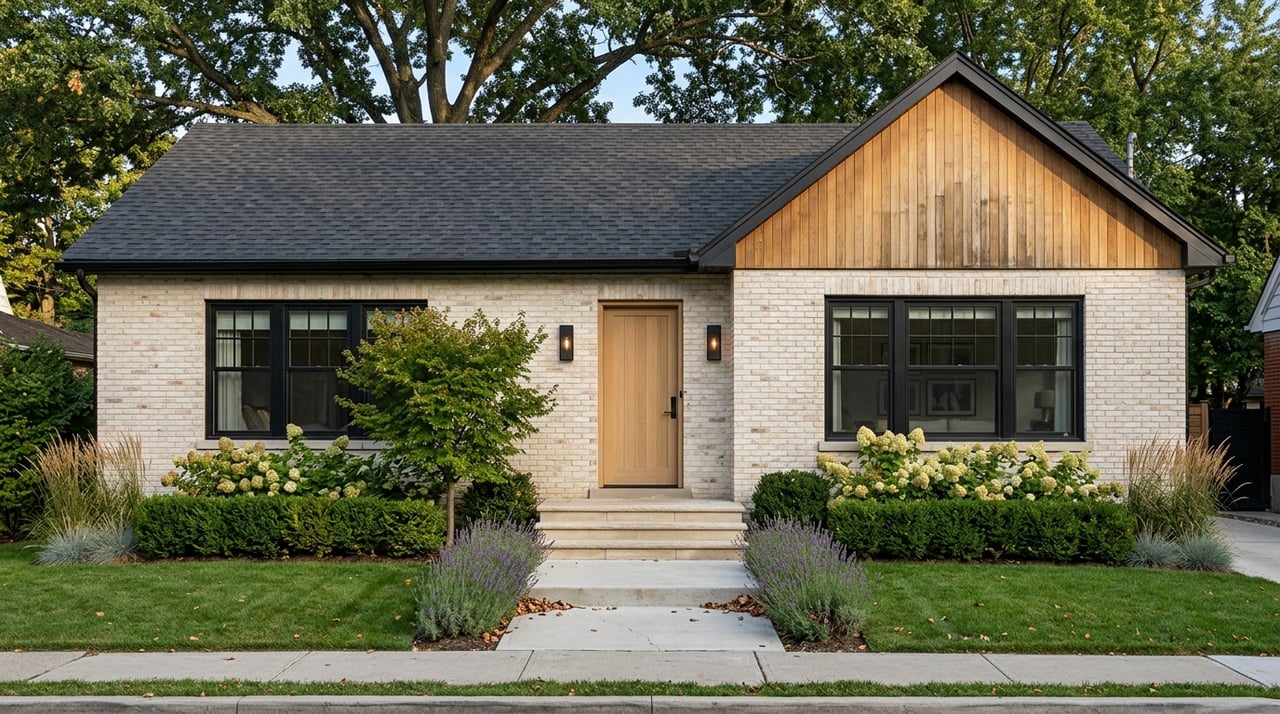
Not every important home style in Cherry Hills Village is a grand revival estate. Ranches, split-levels, and midcentury homes are also part of the local housing mix, especially in areas where modestly scaled homes sit on unusually large parcels. For many buyers, this is one of the most interesting parts of the market.
The city’s residential bulk-plane strategy report helps explain why ranch homes remain relevant here. In the R-5 context, existing neighborhood design covenants limit height to one story or split level on most lots, and the report notes that most existing structures are modestly scaled one-story ranch-style homes oriented parallel to the street. In other areas, the city also notes that many existing homes are relatively small compared with their lots and that redevelopment should maintain compatible massing.
That means a ranch in Cherry Hills Village can offer something very different from a ranch in a more typical suburban setting. The house itself may appear simpler, but the lot, tree canopy, privacy, and future flexibility can make it a true estate property. For some buyers, that combination is exactly the appeal.
Local market coverage also highlights the midcentury-modern layer in the village. Examples described in recent reporting include one-story homes with open layouts and large windows, including a 1964 home on a mature lot and a 1961 expanded home on 1.81 acres marketed as a potential horse property. These homes show how midcentury architecture can take on a different character when paired with estate-scale land.
Ranch and midcentury properties often attract buyers who value:
In Cherry Hills Village, a simpler exterior does not necessarily mean a less significant property. In many cases, the land is the headline feature.
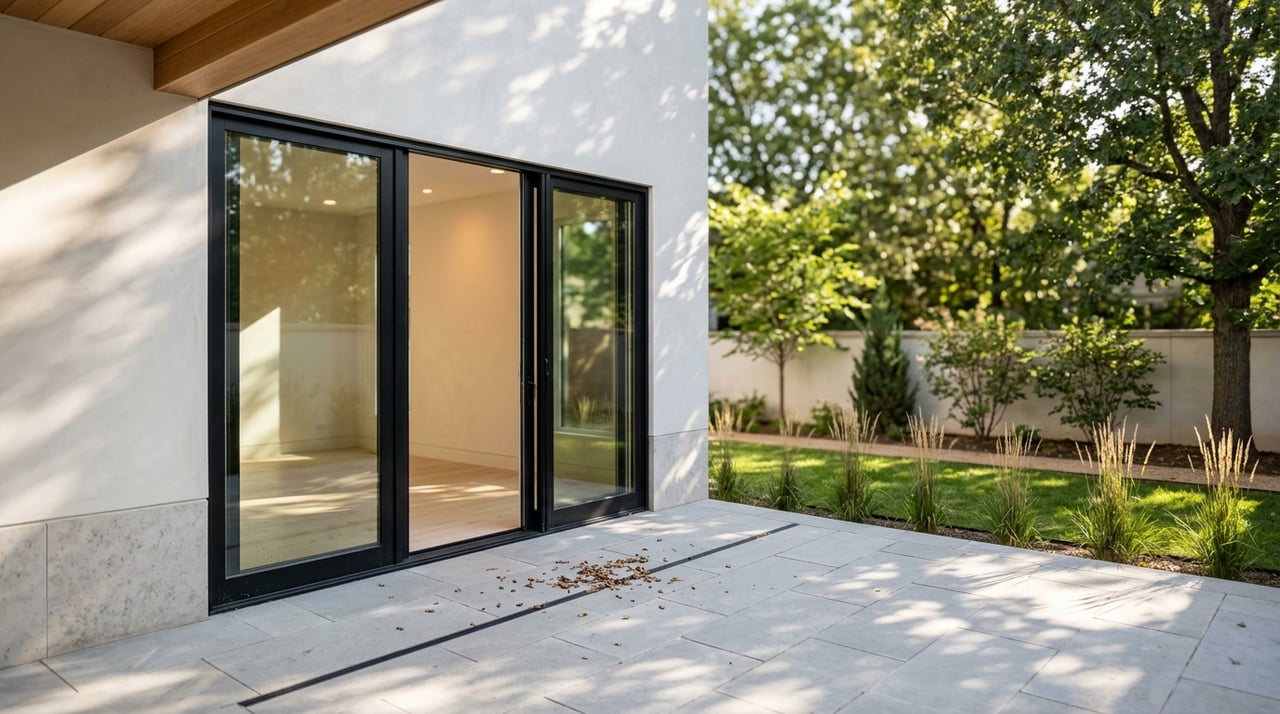
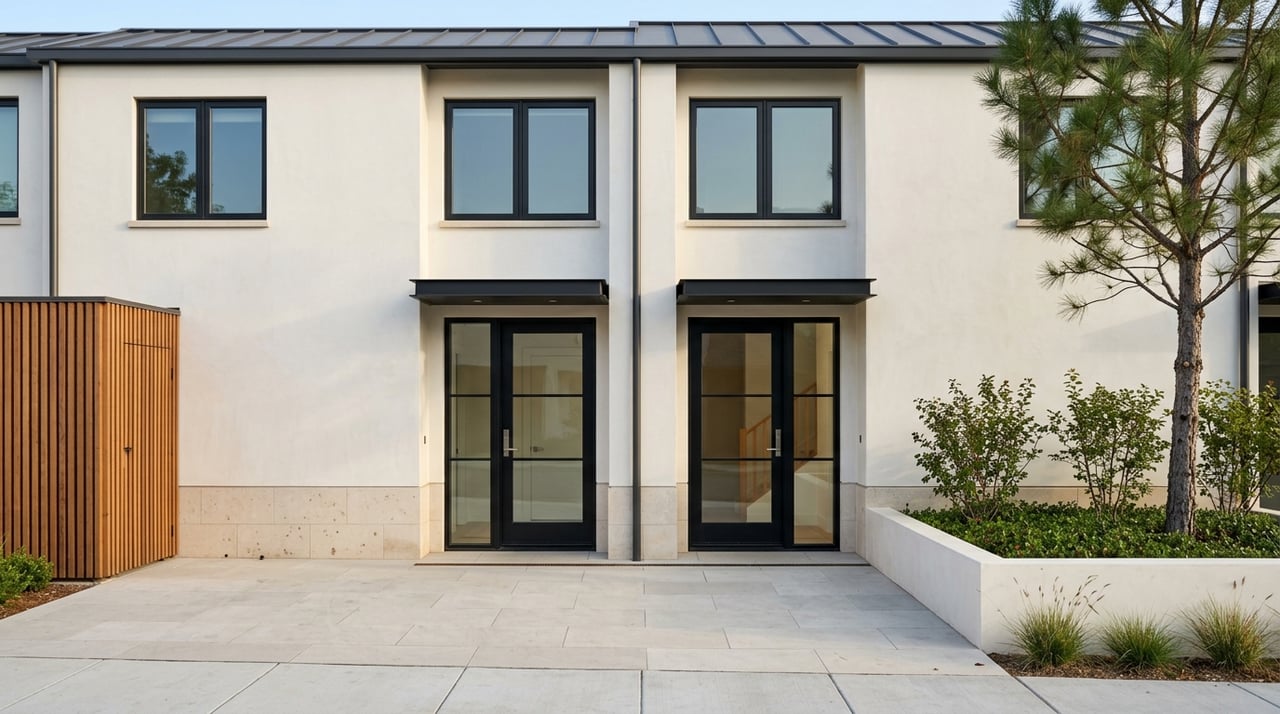
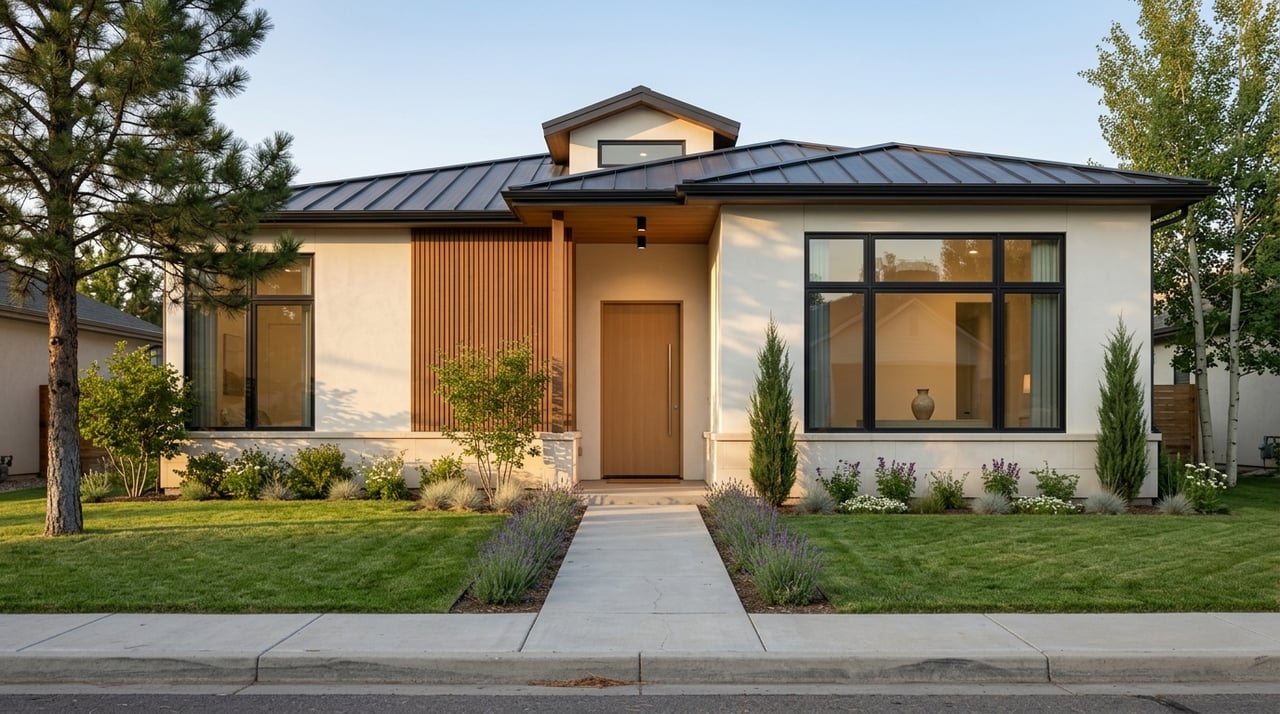
The newer luxury layer in Cherry Hills Village is less about a single modern style and more about custom, site-sensitive design. Newer homes here are often tailored to the parcel, the surrounding landscape, and the scale expected in the market. Instead of feeling standardized, they tend to emphasize proportion, materials, and livability.
Gated enclaves are also part of the area’s housing mix. Buell Mansion is described by its HOA as a 110-acre exclusive gated enclave with private roads, trails, open space, a historic mansion, tennis courts, a pool, and Buell Lake, and its contact page describes it as security-controlled. Glenmoor Country Club also states that it is within a private gated community.
Design coverage of newer homes in Cherry Hills Village suggests that the market often favors classic architecture updated for contemporary living, rather than homes that lean fully trend-driven or ultra-minimal. A recent feature on a new village home emphasized classical proportion, human scale, and a timeless feel. Another design feature highlighted stone walls, slate-tiled hip roofs, and a major interior refresh layered onto an imposing older structure.
While every custom home is different, newer luxury properties in Cherry Hills Village often emphasize:
That helps explain why many new builds here still feel connected to the broader character of the village. Even when the interiors are highly updated, the exterior presence often respects the estate setting.
Price point plays a major role in which architectural layer you’re most likely to access. As of April 30, 2026, Zillow reported an average Cherry Hills Village home value of $3,245,374, 35 active listings, and a median list price of $3,613,833. Redfin reported a median sale price of $3,650,615 in April 2026.
Current listing examples show the range that buyers may encounter. Redfin’s market page included a 7-bedroom, 10-bath, 10,314-square-foot estate on a 1.8-acre lot at $4.2 million, along with a 1961, 7,000-square-foot home on 1.81 acres marketed as a potential horse property at $3.2 million. Those examples help illustrate how architecture, lot size, age, and updates interact in this market.
In practical terms, lower multimillion-dollar budgets may align more often with older ranch or midcentury homes on strong parcels. Higher budgets may open the door to larger estate lots, renovated legacy properties, or newer custom homes in gated settings. That is why it helps to evaluate homes here as a full package rather than focusing on style alone.
If you’re shopping in Cherry Hills Village, it helps to look beyond the front elevation. In many cases, the value of a property is tied just as much to the setting as to the architecture. Two homes with very different exteriors may offer a similar estate experience if the lots, privacy, and planning are strong.
As you compare options, pay attention to:
This is one of those markets where a modest-looking home can sit on a truly rare piece of land. It is also a place where a newer custom home may read more traditional than contemporary, even with updated interiors and floor plans.
If you’re preparing to sell in Cherry Hills Village, your home’s architecture matters, but the story should be broader than style labels alone. Buyers in this market tend to respond to the full estate picture, including the lot, privacy, landscaping, and how the home lives day to day. Positioning the property well means identifying what truly makes it distinctive.
For a historic revival estate, that may be architectural pedigree, masonry details, or formal grounds. For a ranch or midcentury home, it may be the parcel, one-level living, and renovation upside. For a newer custom property, it may be the quality of materials, timeless design choices, and site-sensitive planning.
In my experience, the strongest results usually come from matching the marketing story to the property’s real strengths. That kind of tailored positioning is especially important in a market where buyers are comparing homes across very different architectural categories.
If you’re thinking about buying or selling in Cherry Hills Village, I’d be glad to help you evaluate how a home’s architecture, lot, and location work together in today’s market. Connect with Kelly Mauro for personalized guidance tailored to your goals.
Stay up to date on the latest real estate trends.
Kelly Mauro is dedicated to helping you find your dream home and assisting with any selling needs. Contact me today to start your home-searching journey!